Close
← Where lies your afterbirth?
Back
Statement
On the Occasion of the Exhibition
It was just about two months since our arrival in Mexico.
San Cristóbal de las Casas—a timeworn town in the heart of Chiapas, southern Mexico, close to the Guatemalan border. Many of its inhabitants are Maya, who still, in their daily lives, wear the traditional clothing of their ancestors. In May 2024, in this old-fashioned town, we became parents.
We had never fervently wished for a child. Our days of making art were full, and the world was always brimming with stimulation. We felt confident that we could savor this life to the fullest without children, and if there was a “seed for the future,” it could be entrusted to our work. Moreover, when the global population had already surpassed eight billion, it was difficult to embrace a hopeful vision of further expansion of the human species.
At some point, we stopped using contraception. It was not the result of a change of heart. We still had no strong desire for children, and yet it no longer felt right to deny the possibility altogether. Around that time, close friends of ours died in quick succession. If death lay beyond our will, then surely the act of giving life did as well. We decided to leave things to the flow.
When we learned of the pregnancy, we were already preparing to depart for Mexico. That too seemed like fate. We chose a home birth because we wanted to eat the placenta—the afterbirth expelled alongside the child. Through a friend, we found a midwife in San Cristóbal.
Her name was Valentina. She had studied midwifery among the Maya, and what she emphasized above all was image. “Do not dwell on what might go wrong,” she repeated. Numerous rituals were performed before the birth. To hold the image of being blessed by the world—this, she said, was what truly worked. That was Maya medicine.
By the time we had grown accustomed to Mexico’s water, labor pains arrived earlier than expected. “As the baby passes through the birth canal, it spirals—imagine that movement.” From the car rushing to our dwelling, she spoke these words to us over the phone.
The mother’s body slowly opened, shifting into a liminal state. Since ancient times, the maternal body has been likened to the earth; for the first time, that metaphor felt true. It was a small earth.
The pelvis loosened like shifting tectonic plates. The lower belly swelled like a rising volcano. With cries like subterranean tremors, magma-like amniotic fluid gushed forth. Already the crown of the baby’s head touched the outside world. Darkness had fallen beyond the window. Then came a final, fierce quake—and in an instant, the head, then the whole body, slipped out.
Unexpected tears welled up without end. It was not, I realized, the tender emotion of parents before their child. Rather, it was an impersonal, primordial awe at life generating itself—wordless, and without intention.
It is well known: our future is not bright. Even now, shells rain down in corners of the world. Rainforests burn, glaciers melt. Expansion culminates in extinction. We walk through twilight.
In this uncertain world, the only certainty may be the end. Every life has an end. So too do species, ecosystems, planets, galaxies—even the universe itself.
We will end. We know this from birth. Universality lies not in being but in nothingness; not in life but in death. Today, we live the promised “end.” And yet, in its midst, we incorrigibly weave and beget life.
It seemed like a prayer. In this world covered by commonplace nothingness, life—being itself—is but a fleeting bubble, a transient miracle. To simply bless that miracle, to say: “How grateful,” “We must cherish this.”
Even so, the child was born. Even so, the world blessed this new life. A prayer is an offering to the void. We gave our deepest thanks to the vast generosity of nothingness that permitted this fragile being.
“Where is your afterbirth—your placenta—buried?”
This is a traditional greeting among the Seri, an Indigenous people of Mexico, when asking where one is from. Across the world there are customs of burying the placenta after birth. We too followed this practice, burying our child’s afterbirth in Mexican soil and planting a hydrangea above it. Then we sang together in a circle, and shared food and wine.
It felt like a living funeral. As we celebrated the child’s birth, we also mourned its fragility. Life is but a “momentary miracle.” To remember this, we buried its twin—the placenta—in the darkness of the earth in advance. We adorned that death with flowers, and with song and dance we pre-emptively mourned it.
While the feast continued, we gazed at the twilight sky. Ah, so this was it, I thought. There had been nothing to fear from the beginning. What mattered was image—Valentina had said so. Night was near. And yet, I hummed once again: Even so.
From the street came the cries of stray dogs. Stirred by that plaintive sound, the sleeping baby awoke.
“Where is your afterbirth—your placenta—buried?”
It is a phrase already spoken among the living-dead, a promise they share. This exhibition has been guided by the image carried in those words. If this exhibition touches your heart, even a little, that would indeed be something to be grateful for.
On the night of Obon’s send-off festival, August 16, 2025
The Artist
Exhibition view
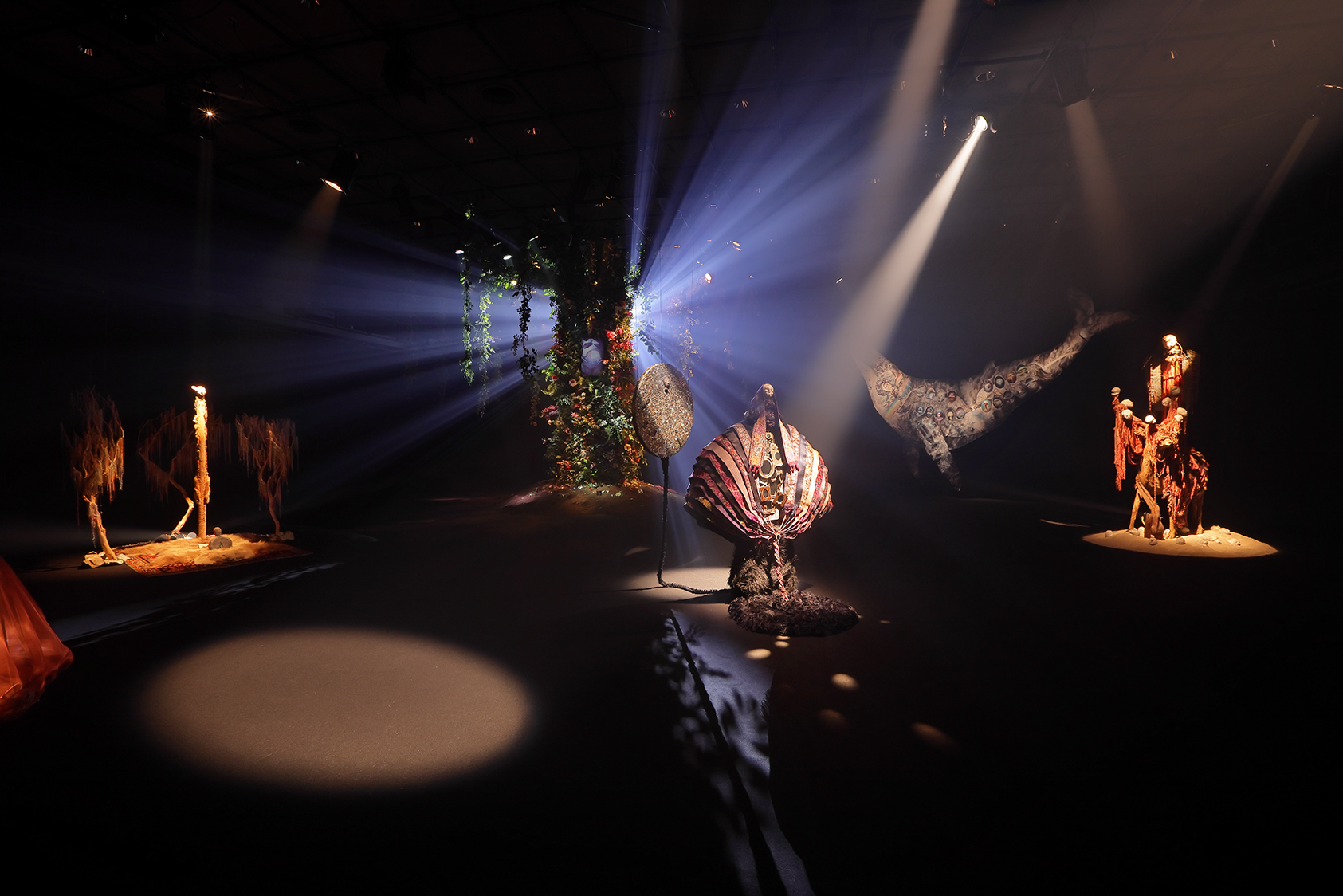
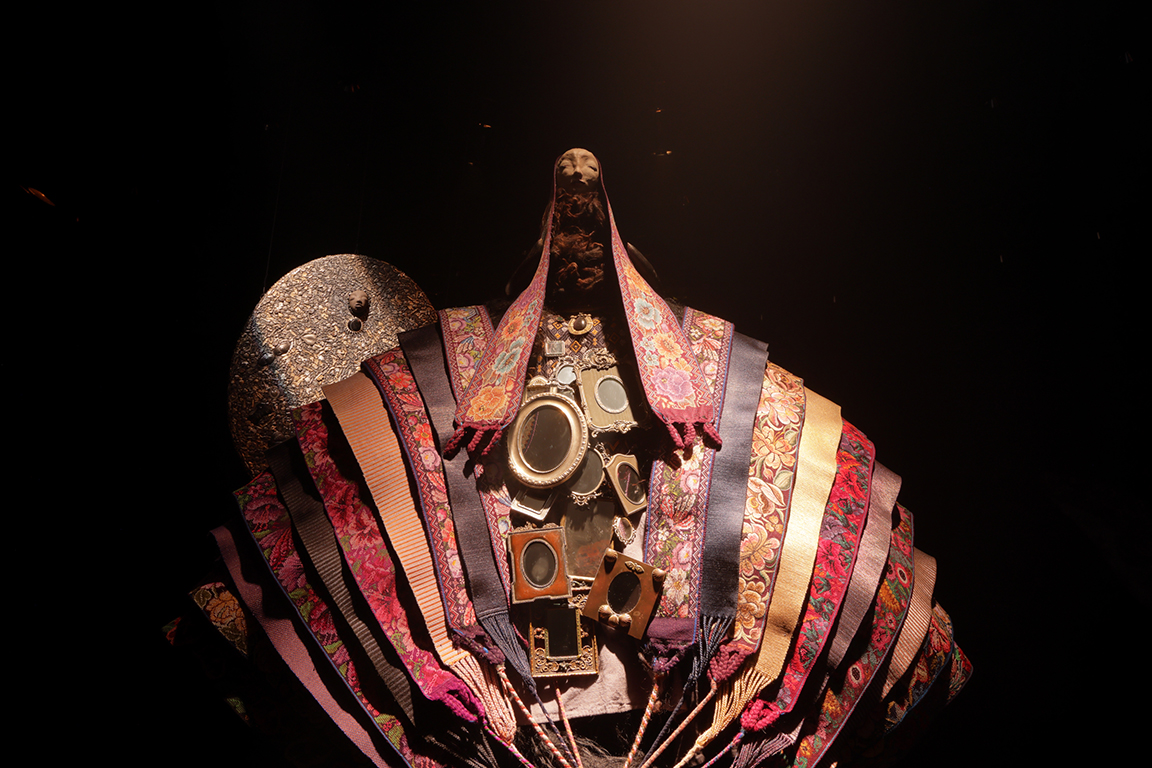
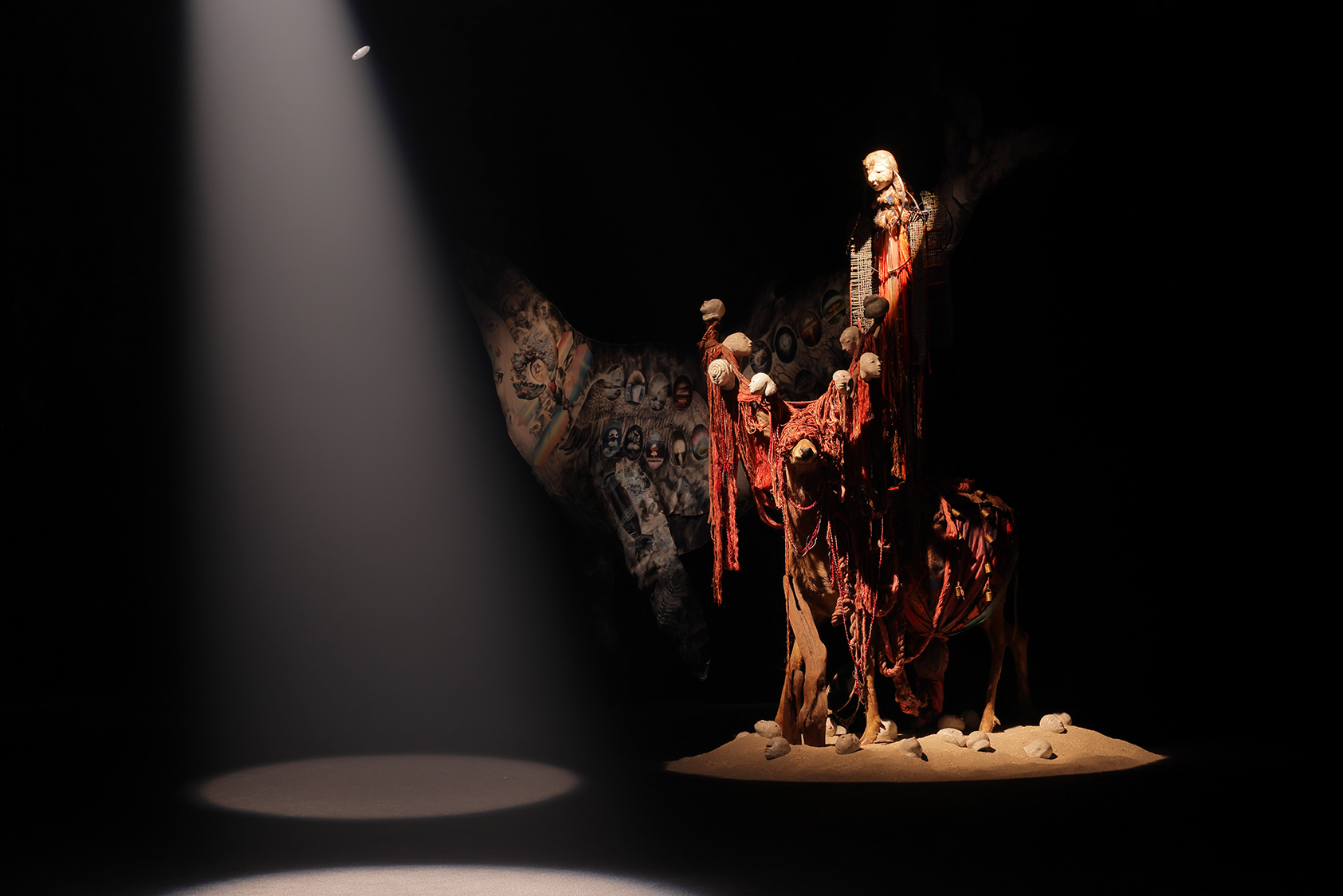
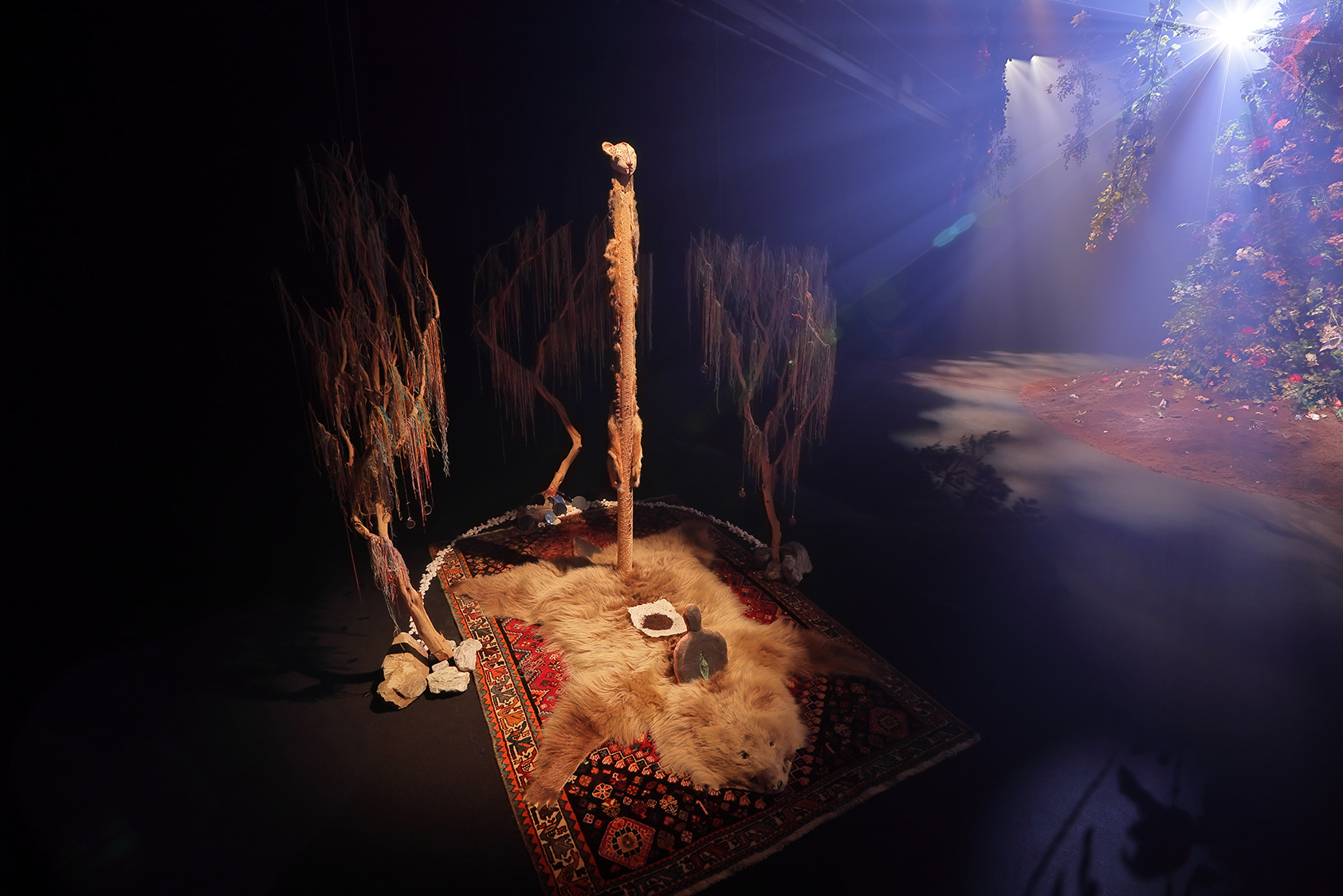
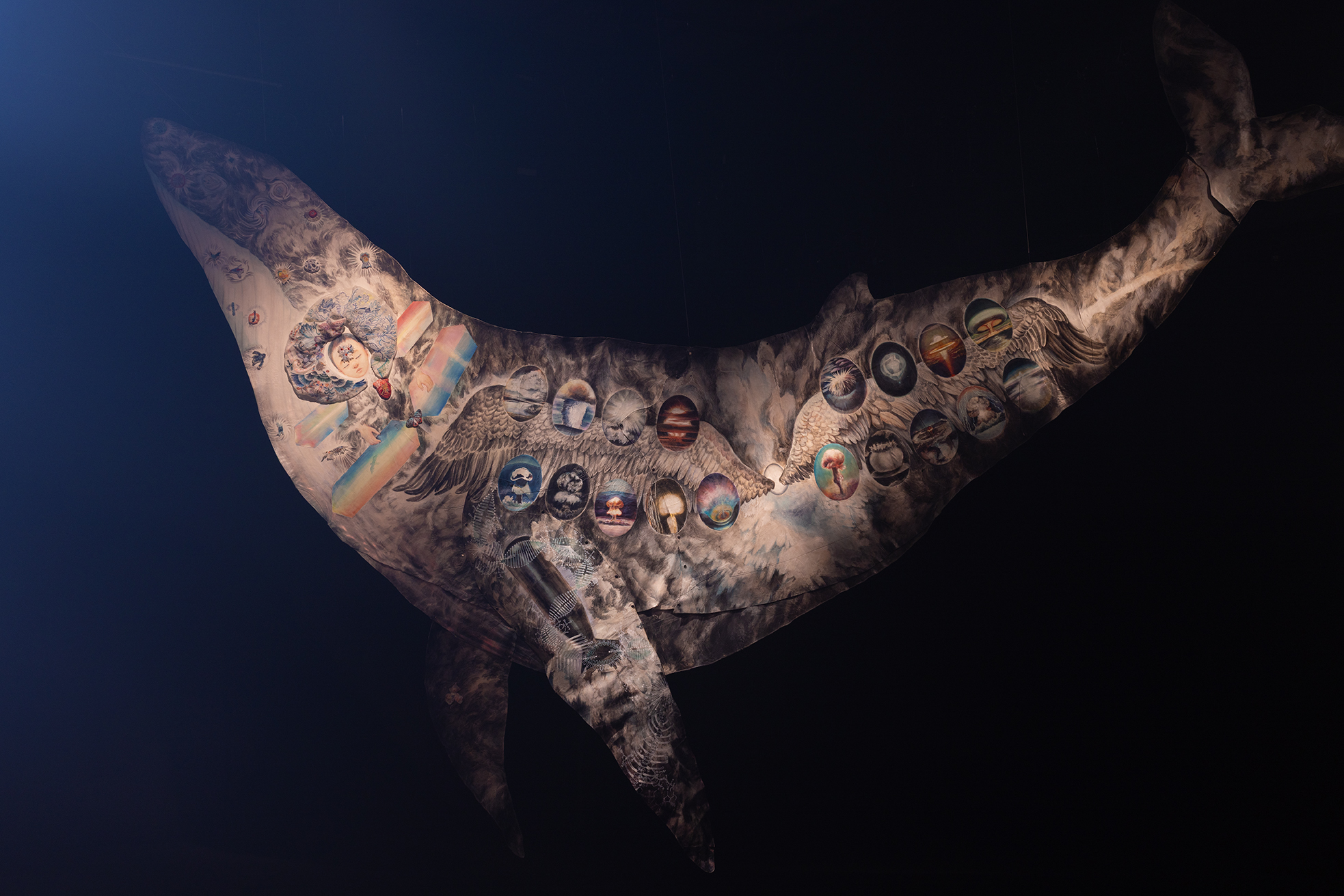
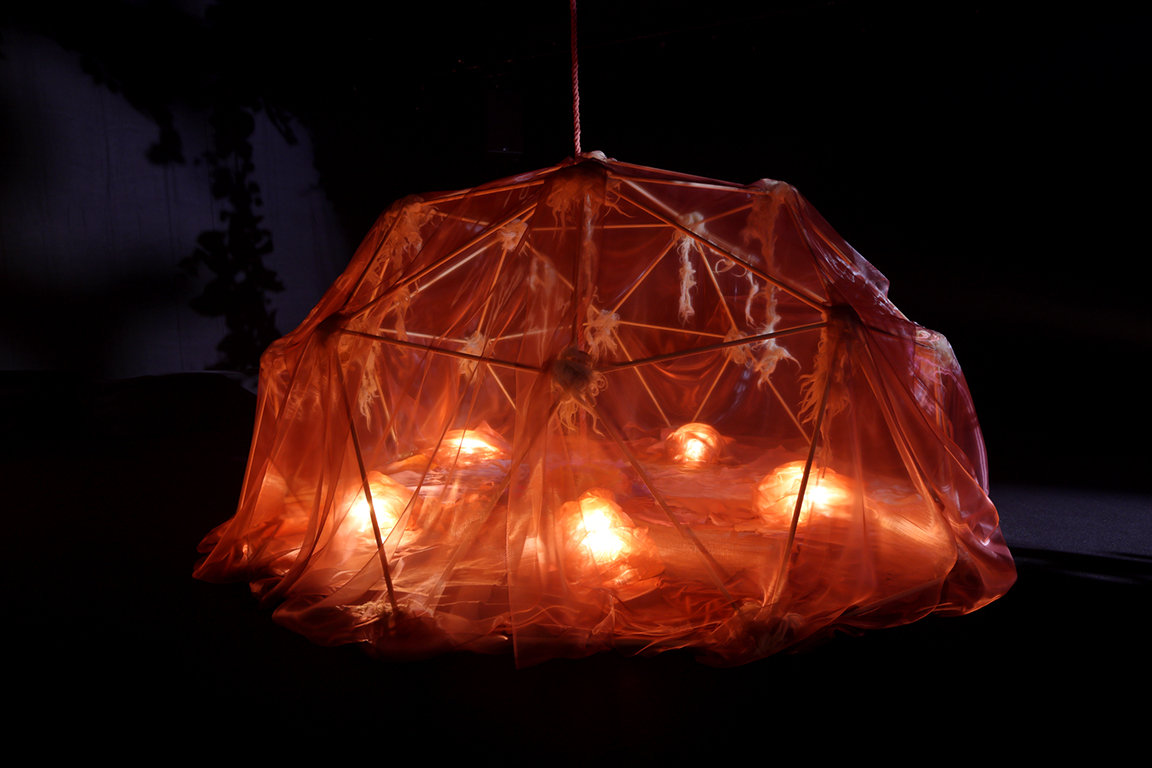
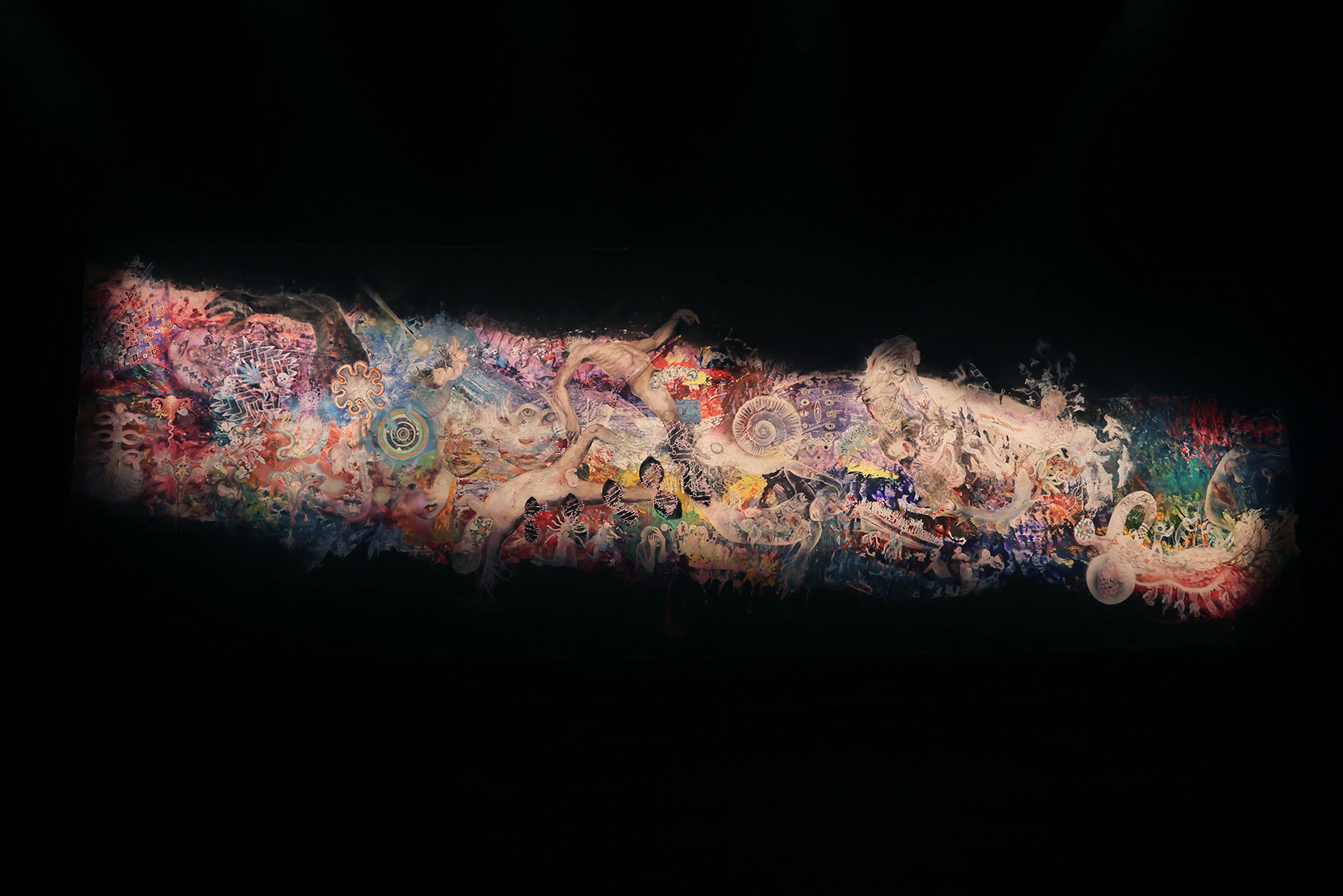
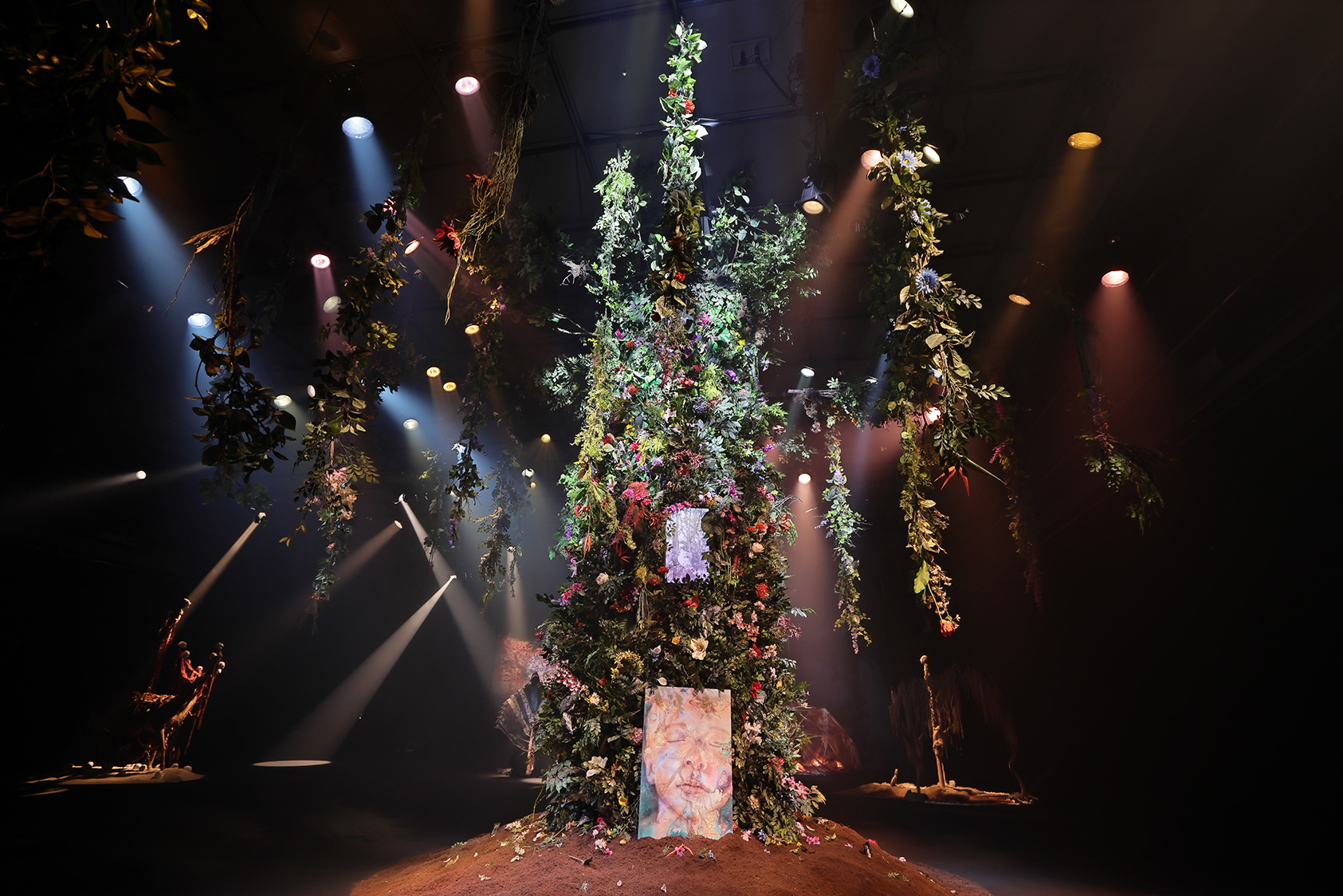
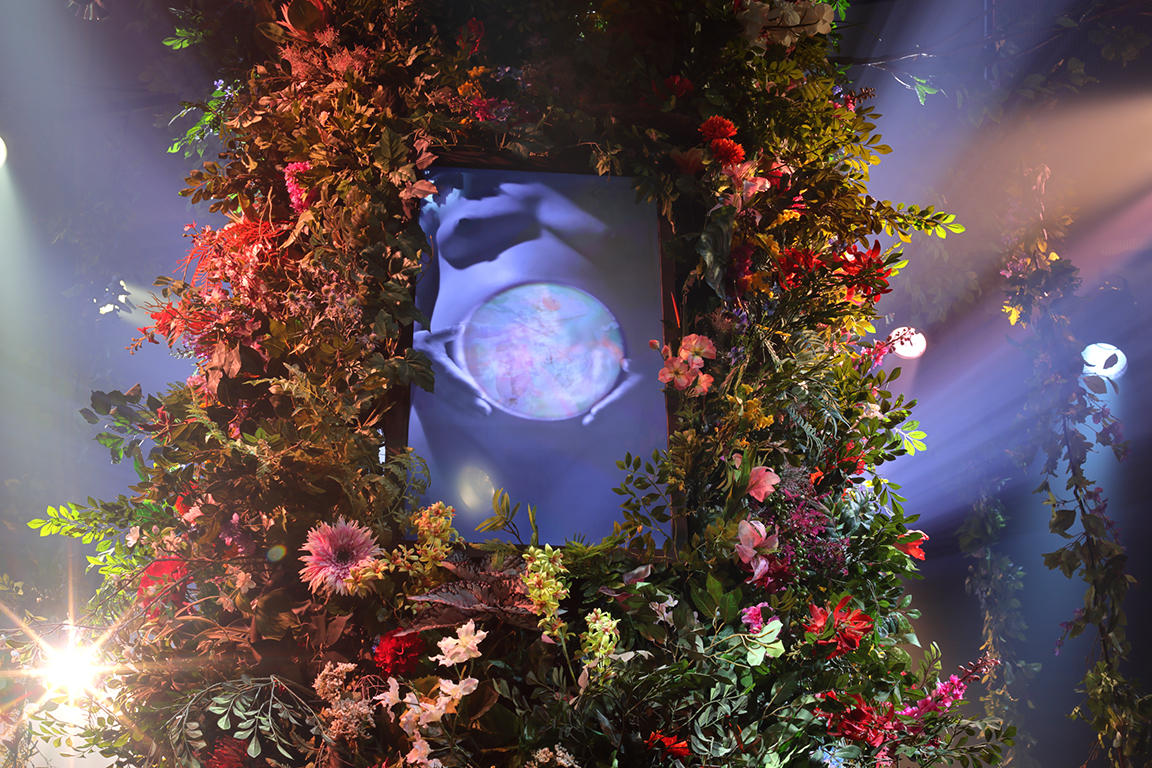
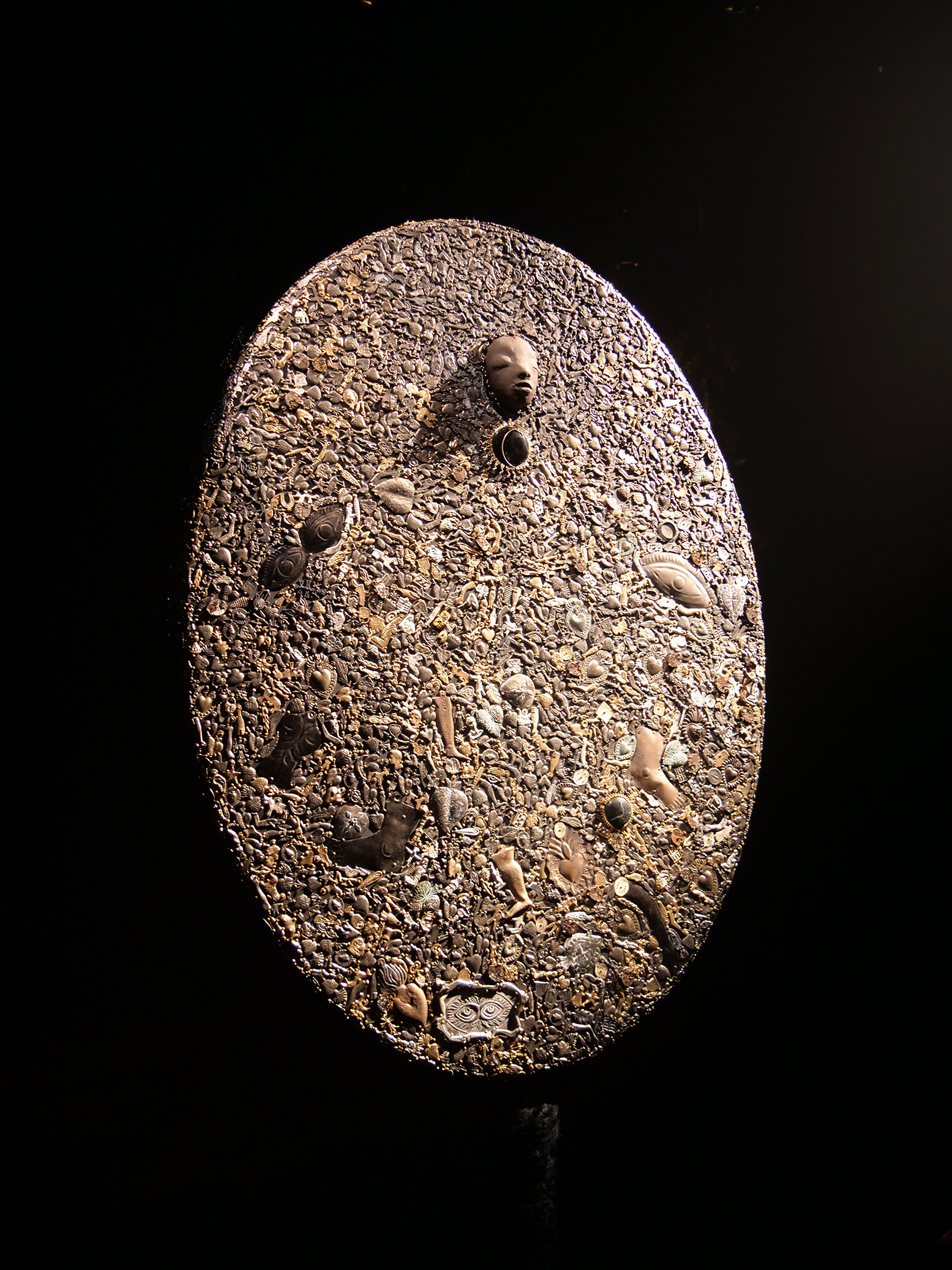
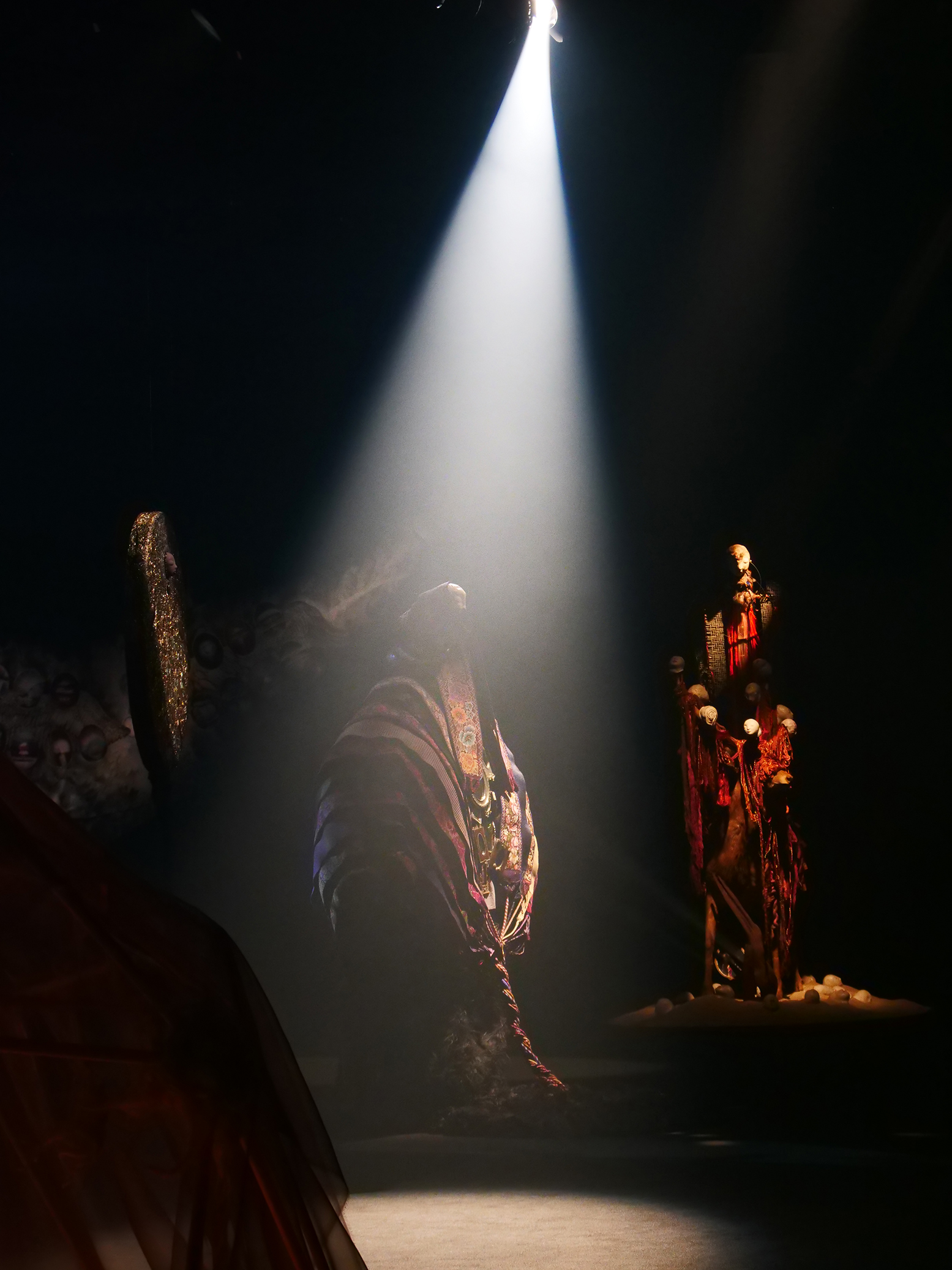
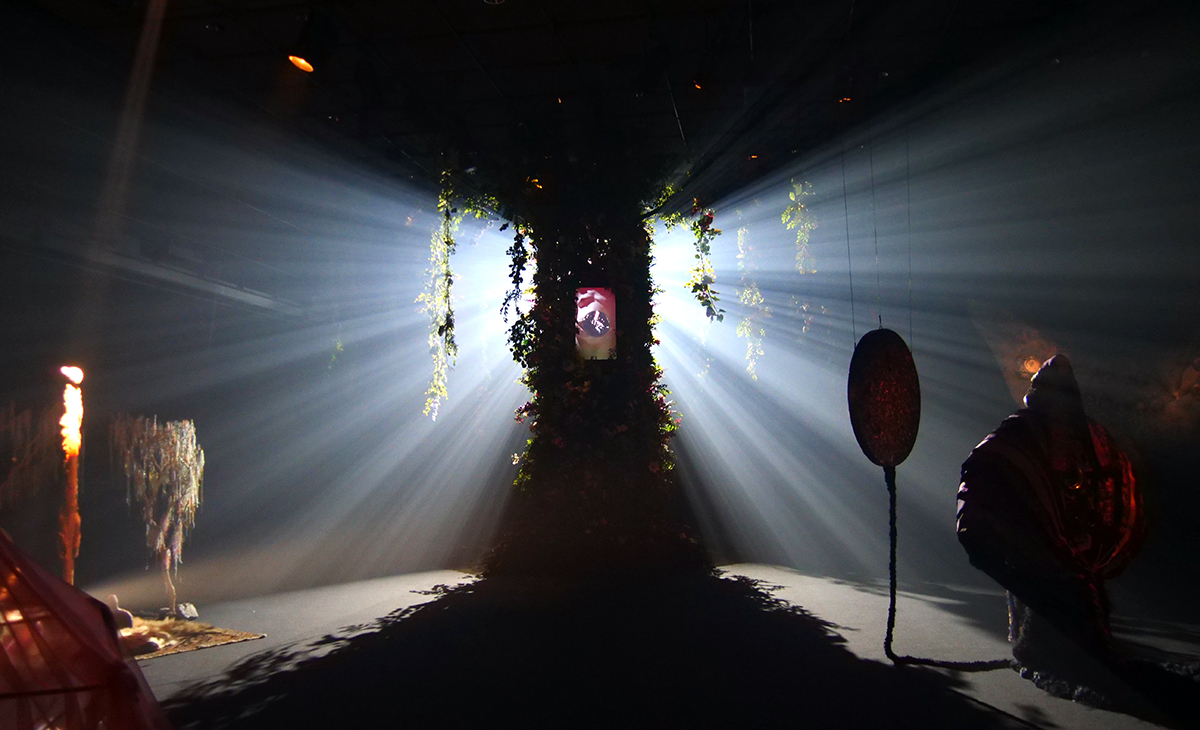
“Where lies your afterbirth?”
A solo exhibition by Maki Ohkojima, held at KAAT Kanagawa Arts Theatre from September 21 to October 19, 2025.
Centered on the themes of life, death, birth, and burial, the exhibition transforms the theatre into a festive space conceived as a “pre-funeral for the world.” Through continuously shifting sound and lighting, the space takes on a sense of movement unique to the theatrical setting, remaining in a constant state of transformation.
Soundscape: Curtis Tam
Text translation: Reo Takada
Dai Matsuoka Performance
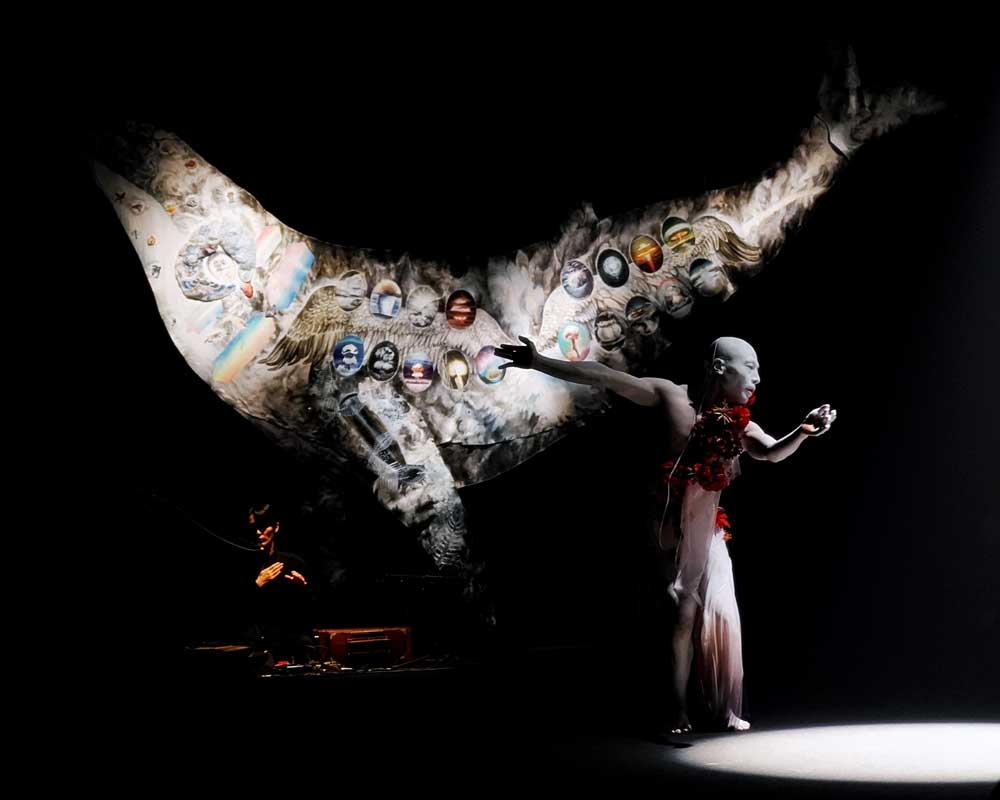
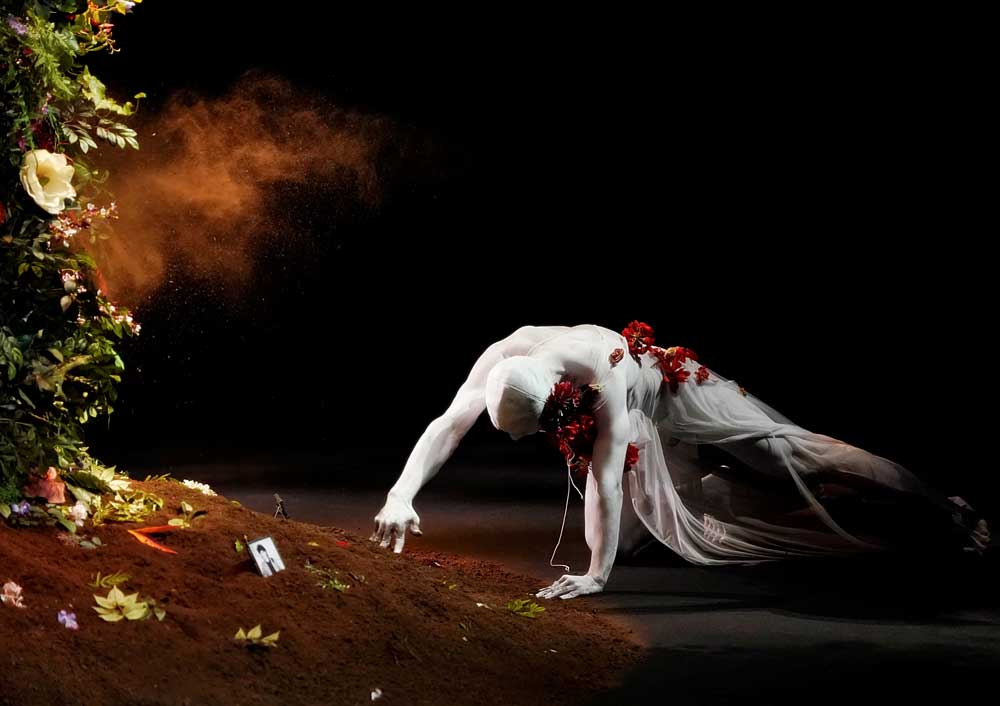
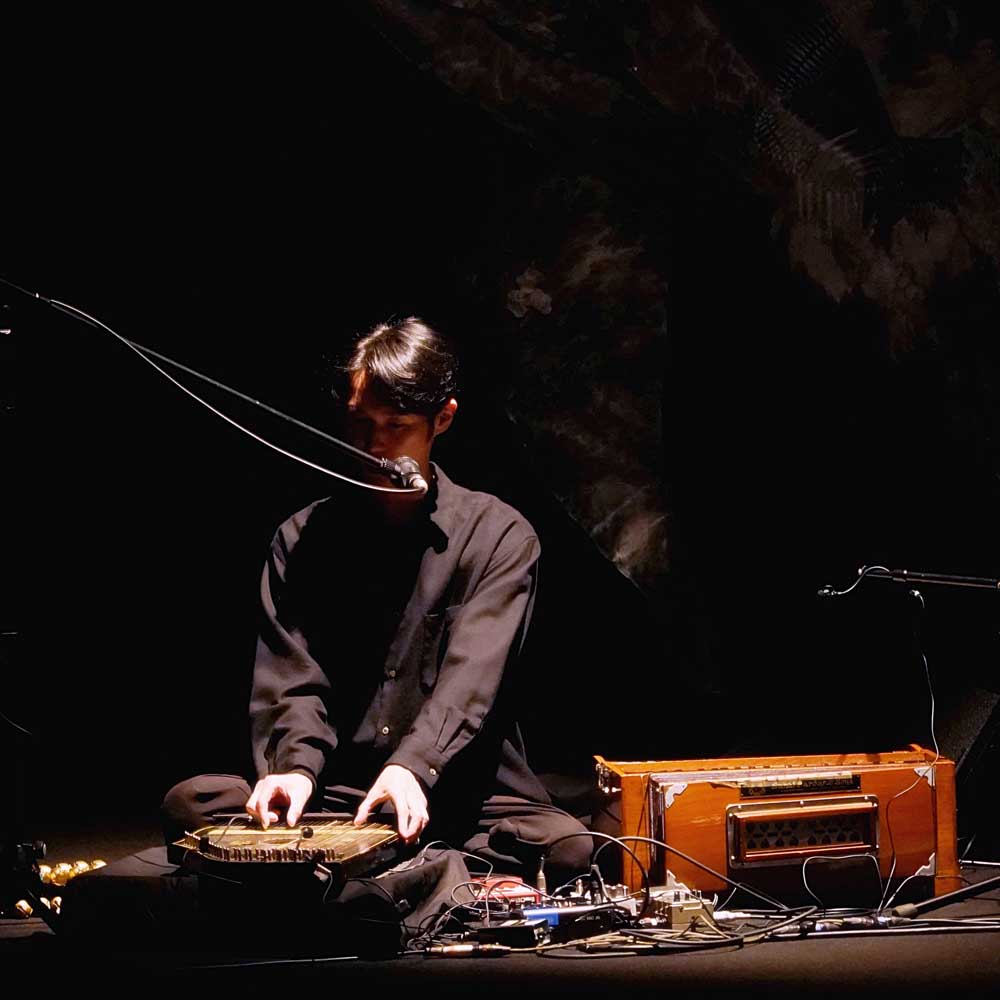
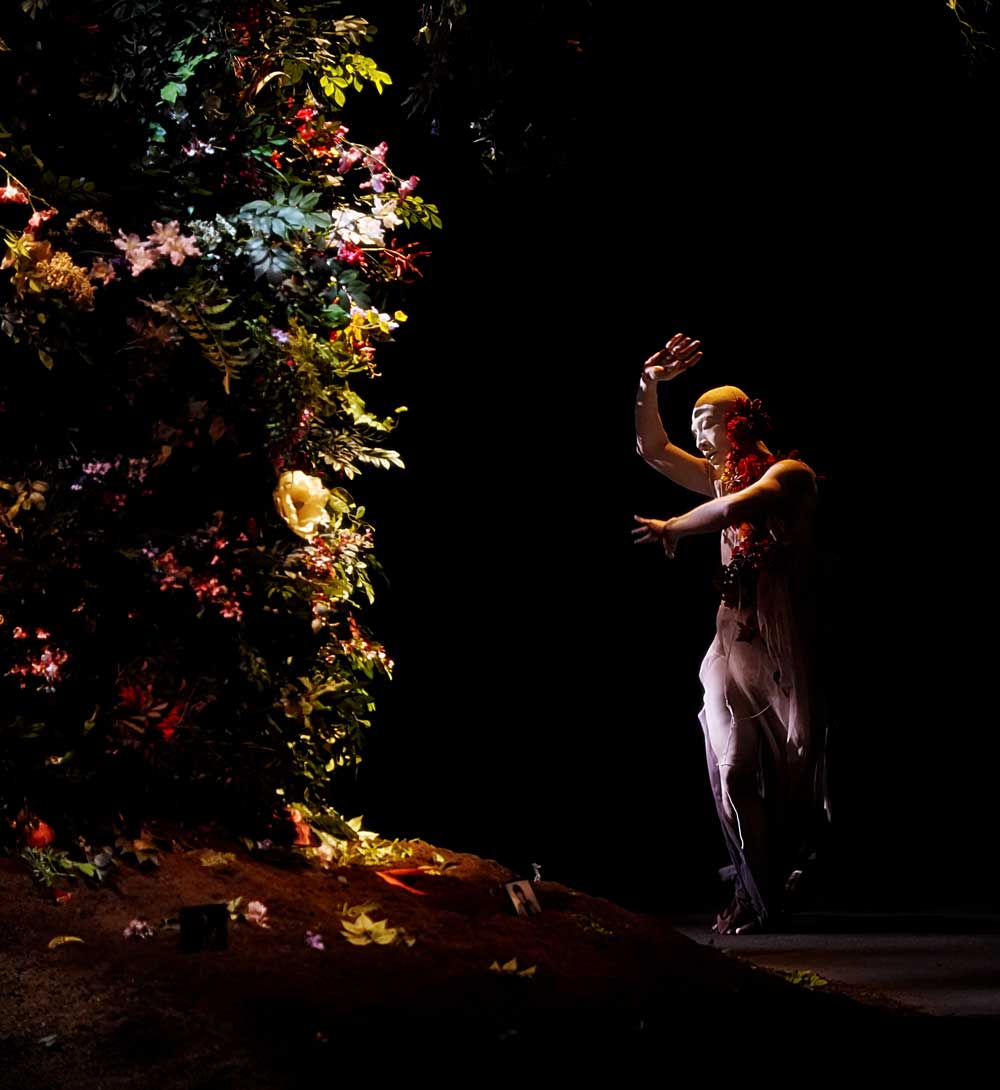
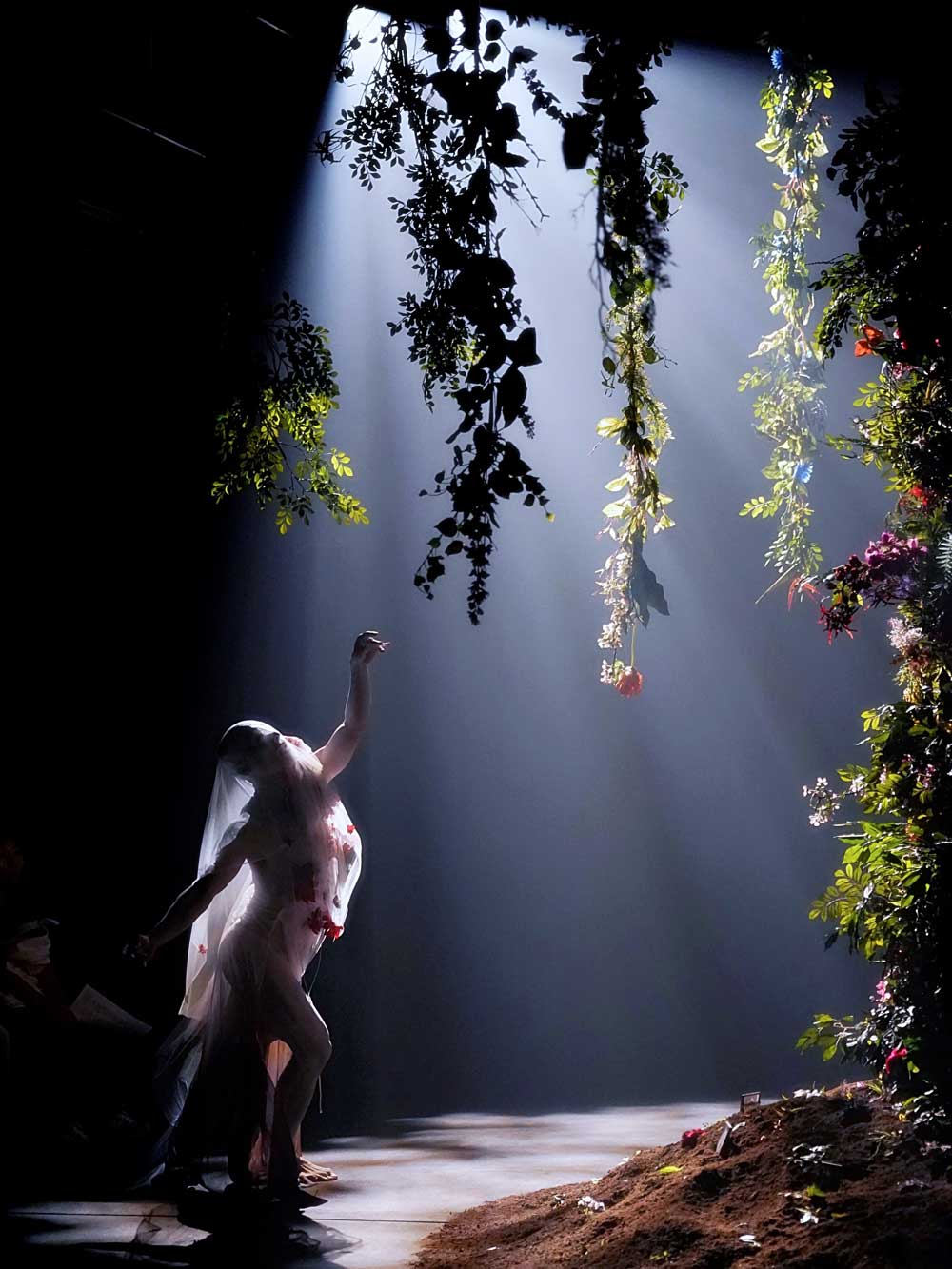
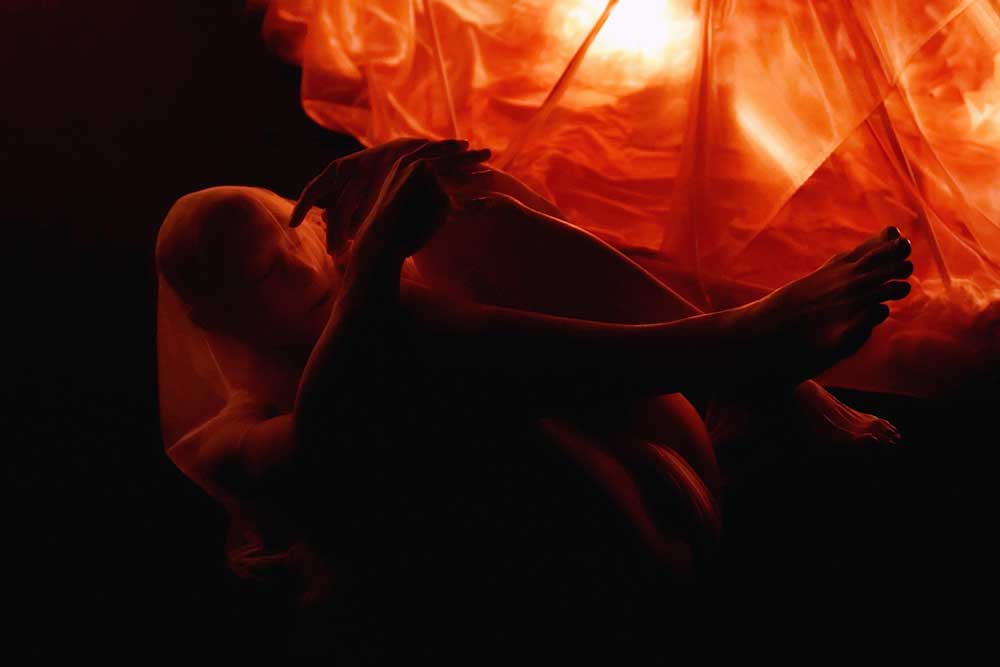
Dai Matsuoka Performance: Afterbirth
During the exhibition period, a performance titled Afterbirth was presented within the exhibition space by Butoh dancer Dai Matsuoka of Sankai Juku.
Enveloped in the strange yet warmly resonant music composed by Koya Sato, Matsuoka—embodying a fetus—wandered and danced through the space. The performance was both striking and oddly nostalgic, evoking in the audience a sense of prenatal memory that could never truly exist.
Hariyama Shishi-odori
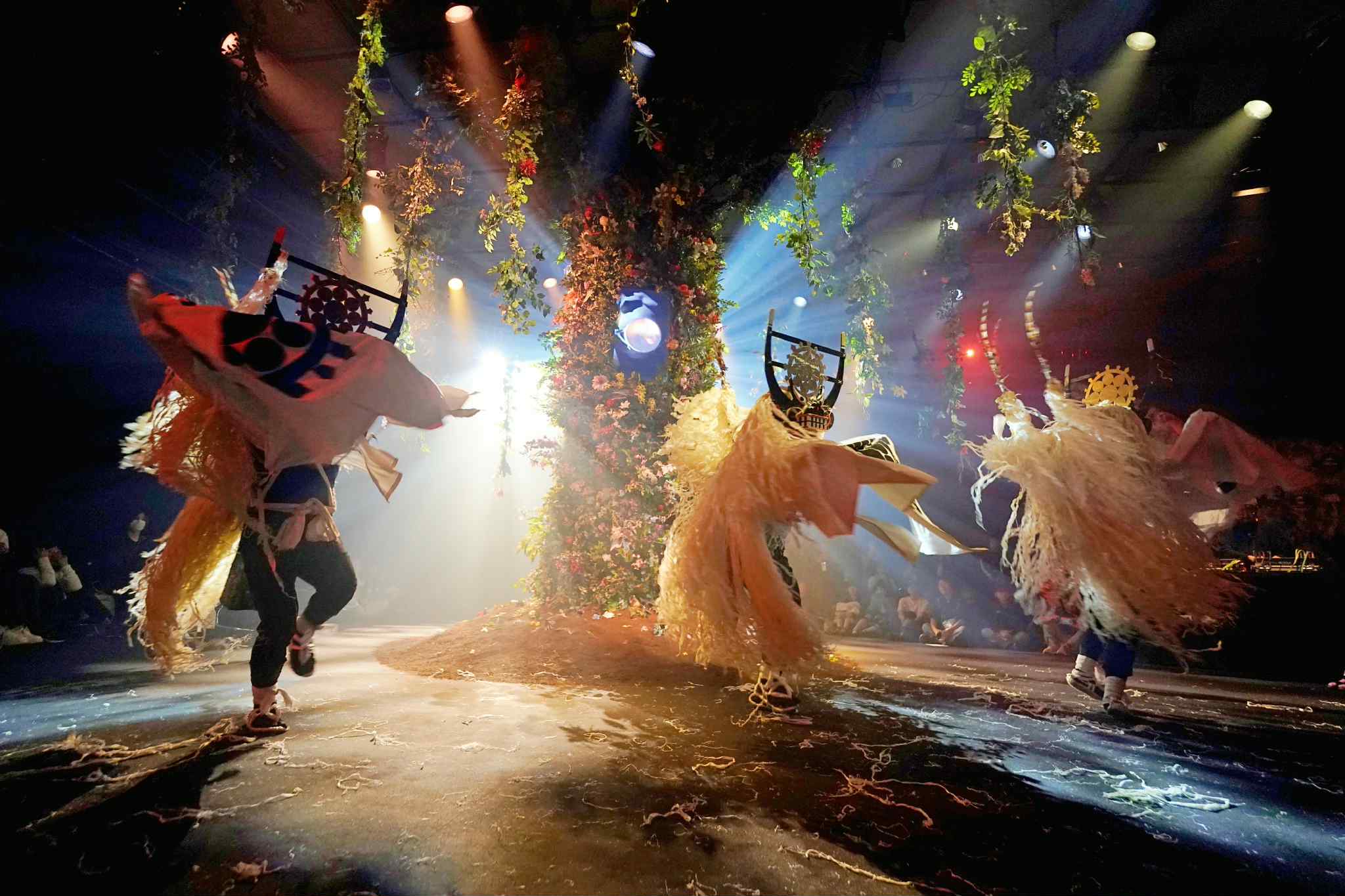
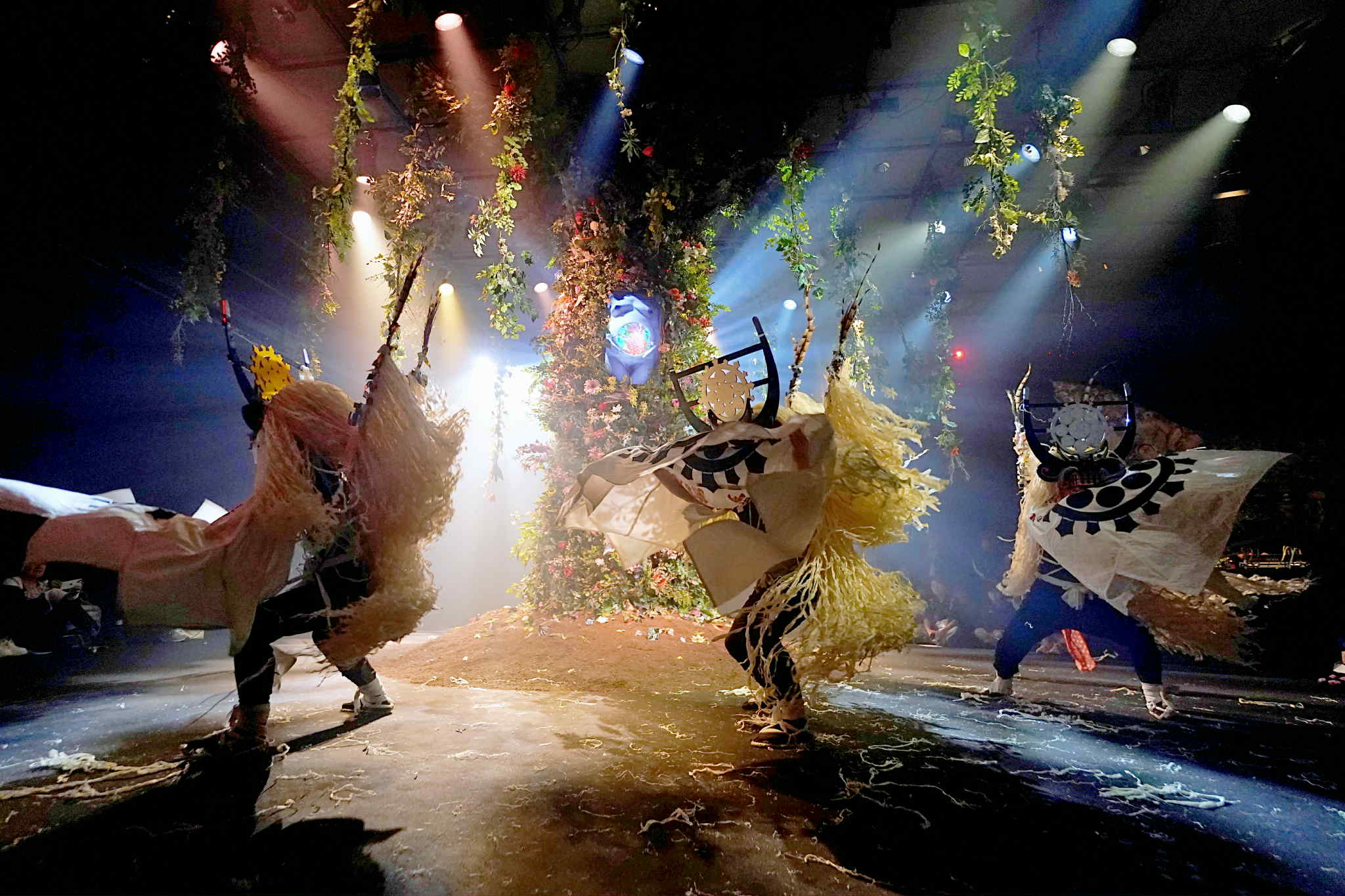
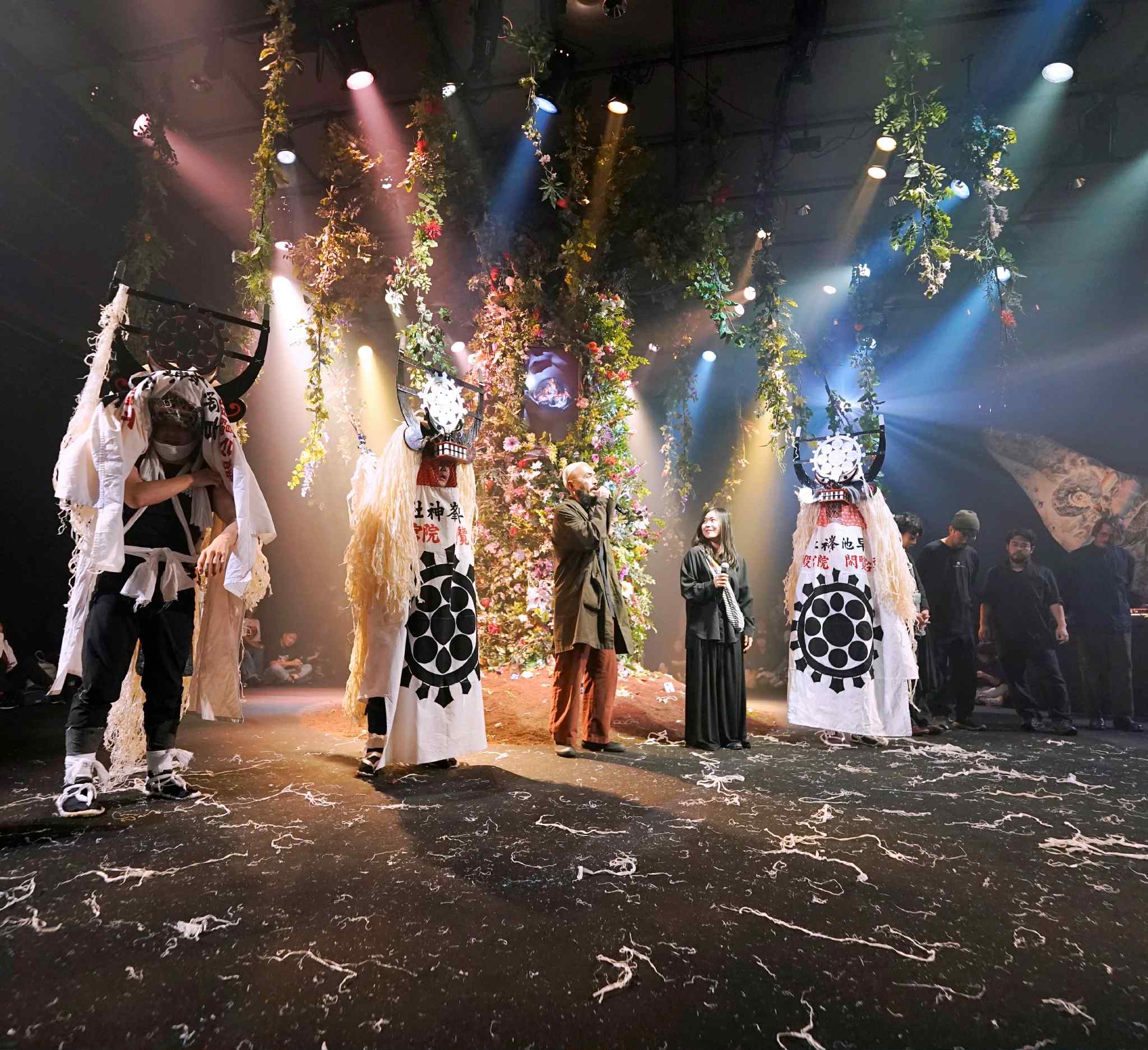
Tōno Meguri Tōrōge / Hariyama Shishi-odori: Female Deer Frenzy
Set in Tōno, a place long associated with the boundary between this world and the otherworldly, Tōno Meguri Tōrōge is an event that interweaves local geinō—traditional performative and ritual practices—with contemporary culture. Through music, performative arts, food, and the voices of local storytellers, the event invites participants to imagine and engage with what cannot be seen.
(Geinō here refers not simply to entertainment, but to traditional performative practices rooted in ritual, communal memory, and embodied transmission, predating modern notions of art.)
On the final day of the exhibition, October 19, a finale ceremony was held featuring a live session from Tōno Meguri Tōrōge. The performance Female Deer Frenzy, based on the Hariyama Shishi-odori (Tōno-go Hayachine Shishi-odori Hariyama Preservation Society), was presented in collaboration with Yosi Horikawa and Daisuke Tanabe. This enactment of shishi-odori (deer dance) unfolded as a dynamic convergence of ritual movement and contemporary sound, resonating across time, place, and practice.
Other Works
←Archives© 2026 Maki Ohkojima